

How To Increase Conversion Rate


Shopify gives you a solid base. It handles payments, products, and checkout without much friction. But anyone who has run a store for more than a few months knows the truth. The real profit does not come from Shopify alone. It comes from the right apps layered on top of it.
At the same time, installing every shiny tool from the app store is a mistake. Too many apps and steps slow down your site, confuse your backend, and quietly eat into margins with monthly fees. Speed drops. Pages feel heavy. Shopify conversion rate suffers. That is why our list is focused. These are the must-have steps that work on Shopify conversion rate optimization.
Practical Ways to Increase Conversion Rate on Shopify
Bundles and gifts help, of course. But Shopify conversion rate improves when the whole store feels clear and trustworthy. We recommend focusing on our ecommerce CRO strategies to remove friction and reduce hesitation.
1. Improve Site Speed
Slow pages cost sales. Compress large images, remove unused apps, and avoid heavy themes. Every extra script adds a delay. So, you should test loading time on mobile, not only on desktop. A store that loads quickly feels more reliable, and customers move forward without any frustration.
2. Strengthen Trust Signals
Many visitors hesitate because something feels uncertain. Add visible reviews. Show real product photos. Place clear shipping timelines near the price. Keep your return policy easy to find. When buyers feel safe, they complete the purchase with less doubt.
3. Simplify Product Pages
Clarity converts better than clever design. Start descriptions with benefits, not technical details. Break long text into short sections. Keep the “Add to Cart” button visible without scrolling. Remove banners and pop-ups that distract from the main action.
4. Reduce Checkout Friction
Complicated checkout flows reduce completion rate. Enable guest checkout. Show total cost early, including shipping. Limit form fields to what is truly necessary. Fewer steps mean fewer exits.
5. Test Small Changes Consistently
Change one element at a time:
- Adjust bundle placement.
- Modify gift thresholds.
- Track the conversion rate weekly.
- Improvement comes from steady testing, not random changes.
Why Bundles Increase Sales Without Extra Traffic

Most stores spend time trying to increase traffic. Ads, content, social media, influencer deals. Traffic matters, but there is another lever that is often ignored. The size of the cart. If your average order value is $50 and you lift it to $65, you have increased revenue without changing traffic volume. Bundles make that possible.
Bundles work for three reasons:
- They reduce decision fatigue. When shoppers see related products grouped together, they do not need to think about what matches or what complements their purchase.
- They create perceived savings. Even small discounts feel meaningful when the total package looks intentional.
- They introduce products that customers may not have considered. A shopper who planned to buy one item often accepts a bundle if it feels logical.
The key is structure. Random bundles rarely convert well. Thoughtful combinations based on buying behavior tend to perform consistently.
Revenue Drivers: The Apps That Actually Move the Needle
This section focuses on tools that directly increase revenue. If you are building your stack, start here.
Koala Bundles
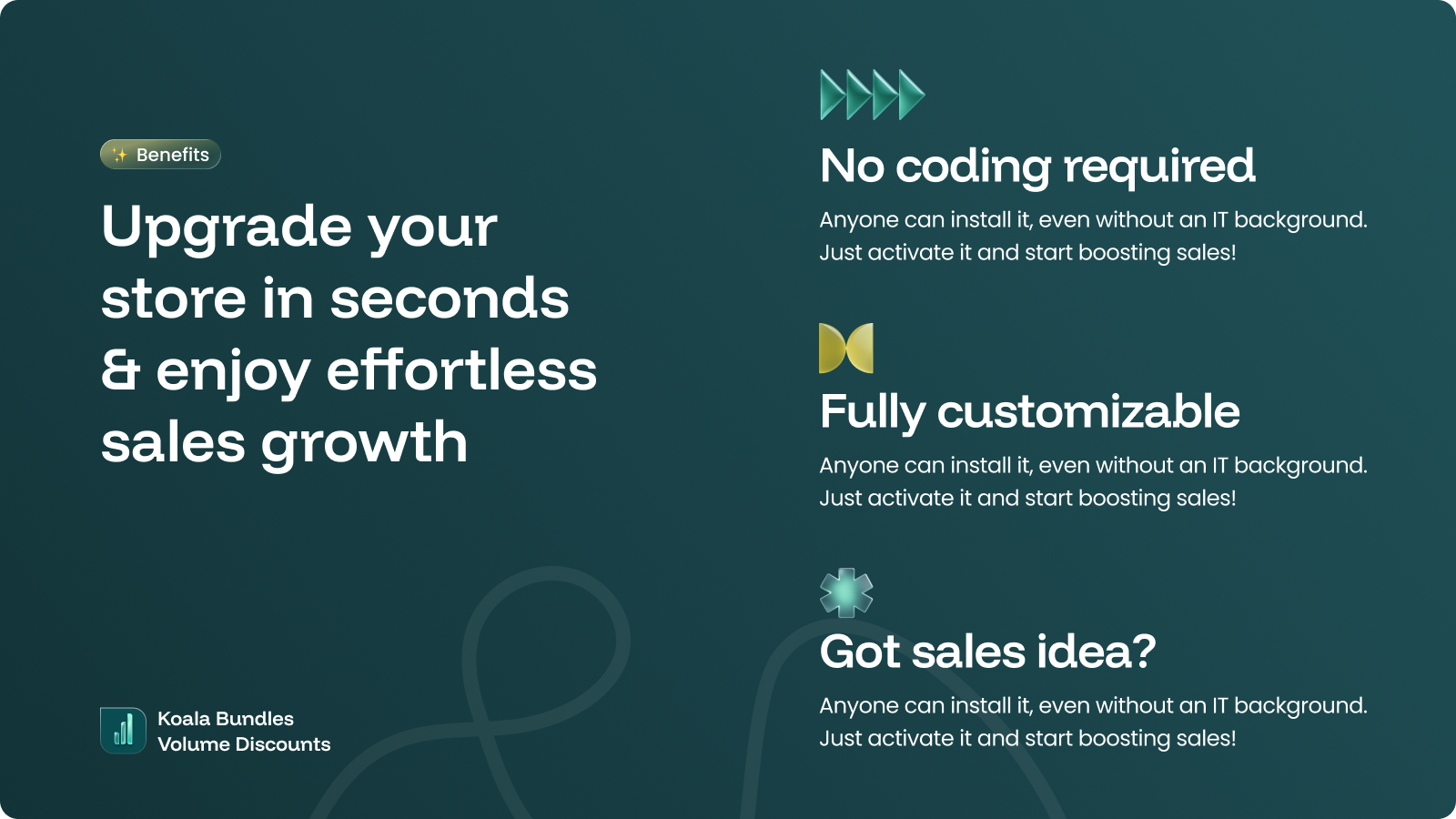
Our top pick for upsells is Koala Bundles. It focuses on increasing average order value through structured product combinations. The strength of this tool lies in simplicity. You can:
- create volume discounts,
- create fixed bundles,
- mix and match offers without confusing the buyer.
The setup does not require technical skill, which matters when you are managing inventory, marketing, and support at the same time. Bundles work best when they solve a clear need. A skincare brand can group cleanser, toner, and moisturizer. A fitness store can package resistance bands with a workout guide. A supplement brand can offer monthly stacks. The offer feels complete, not forced.
Instead of pushing single add-ons at checkout, you present a ready-made solution on the product page. That shift alone often increases Shopify conversion rate.
Best For:
- Increasing average order value
- Creating volume discounts
- Structuring product sets for seasonal campaigns
When you review your analytics, look at products frequently purchased together. Start there. Build bundles around real behavior, not guesswork.
Koala Free Gift
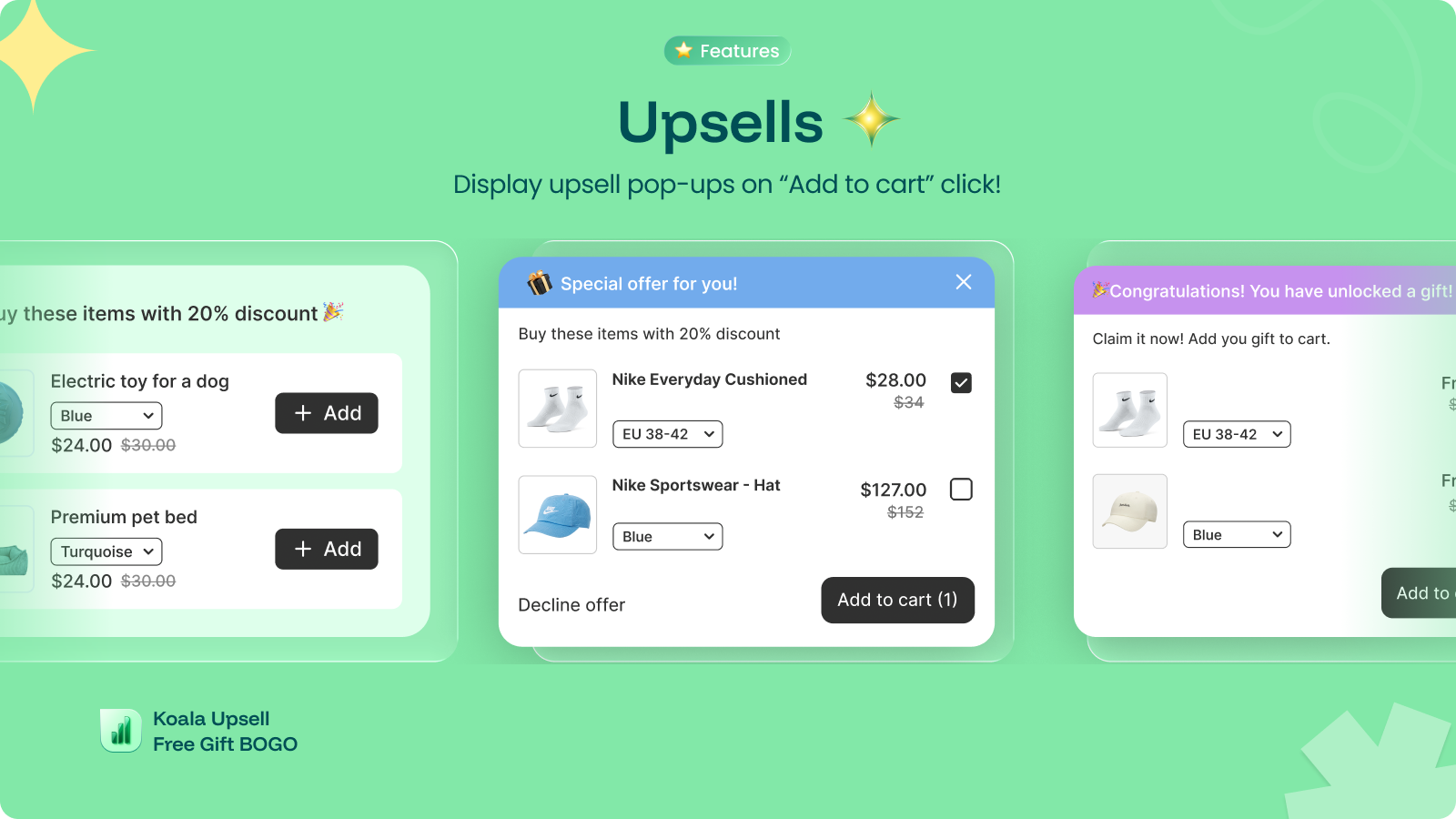
The tool we recommend for gifting strategies is Koala Free Gift. While bundles raise cart value, free gift offers focus on conversion rate. There is a reason gift incentives remain effective. Customers like feeling rewarded. A free item at a certain threshold encourages shoppers to complete the purchase instead of leaving.
Cart abandonment often happens at the final step. Shipping costs appear. The total price feels higher than expected. A free gift softens that hesitation. The purchase feels justified. The app allows you to trigger gifts based on cart value, specific products, or promotional periods. This flexibility lets you test different thresholds without redesigning your store.
It is important to keep the gift relevant. Random low-value items can feel like clearance stock. Choose something that connects to the main product and supports repeat purchases.
Best For:
- Reducing cart abandonment
- Increasing Shopify conversion rate at checkout
- Running limited-time promotions
When bundles increase average order value, and gifting improves completion rate, you build two layers of revenue growth. That combination works consistently across niches.
How to Structure Bundles for a Higher Conversion Rate
Tools alone are not enough. Strategy matters.
- Start by analyzing purchase behavior. Look for patterns in repeat orders. Identify products that naturally belong together.
- Next, price your bundles carefully. A small discount is often enough. Large discounts may reduce margins unnecessarily. Test 5 percent, 10 percent, and value-based offers.
- Placement is also important. Feature bundles directly on product pages, not hidden in a separate collection. Visibility affects uptake.
- Use clear visuals. Show each product included in the set. Outline the total value and savings in plain language. Avoid clutter.
- Limit the number of bundle options. Too many variations create confusion. Two or three strong offers perform better than ten scattered combinations.
- Finally, test regularly. Change product pairings every few months. Track performance. Remove weak bundles and double down on those that convert.
Testing and Iteration Without Overcomplication
Store owners often hesitate to test because it feels technical. It does not have to be. You can start with simple comparisons. Run one bundle for a month. Measure average order value and conversion rate. Replace it with a new variation and compare the results. Free gift thresholds can also be adjusted gradually. Move from $50 to $60 and monitor cart completion. Small changes often produce noticeable differences.
Keep your stack lean. Focus on a few must-have Shopify apps that support speed, visibility, and revenue growth. Avoid stacking overlapping tools that slow your store down. The goal is clarity. Clear offers convert better than complicated ones.
Build a Lean Stack That Supports Growth
Boosting sales with Shopify bundles does not require a complete store overhaul. It requires focus. Bundles increase average order value. Free gifts improve checkout completion. Design tools improve presentation. SEO tools increase visibility. Speed tools reduce friction.
When these elements work together, revenue grows without aggressive tactics:
- Start with the revenue drivers.
- Structure your offers around real buying behavior.
- Test consistently and refine what works.
Take your Shopify conversion rate seriously and start with the cart, not another app. A clean setup with a few Shopify apps that push revenue will do more than a store stuffed with features you rarely touch. Build the bundles first, watch how the cart value reacts, then decide what deserves to stay.
.png)



From the blog
Must-Have Shopify Apps to Scale Your Store in 2026

.jpg)
How to Get Sales on Shopify: 10 Strategies for Beginners
.jpg)
Boost Sales with Shopify Bundles: The Ultimate Strategy Guide
.jpg)
.jpg)