

How to Get Sales on Shopify:


Increasing Shopify sales is not about luck, and it is not about installing every new app you see. Many beginners launch a store, add products, and wait. Then nothing happens. Traffic comes in small waves, carts stay empty, and doubts start to grow. So conversion rate optimization becomes a real focus. Every store owner goes through it.
Are you just starting out? Then you definitely need to know how to get sales on Shopify. The basics are: structure, focus, and a few decisions that actually push people toward checkout. Our strategies are practical, realistic, and built for beginners who want steady sales.
1. Pick a Clear Niche
If your store sells a bit of everything, visitors struggle to understand what you are about. A tighter niche makes your store feel more real and more trustworthy.
Problem it solves: Visitors feel unsure because the store looks unfocused.
Benefits:
- Makes your homepage message clearer.
- Helps the right customers recognize themselves.
- Makes ads and posts easier to write.
- Reduces decision fatigue for shoppers.
2. Write Better Product Descriptions
Many stores use copied text that says very little. A good description answers real questions and helps the buyer picture the product in their life. This way, you can sell more! Strong descriptions are a core part of product page optimization.
Problem it solves: People do not buy because the product feels unclear or generic.
Benefits:
- Explains what the product does in plain words.
- Reduces doubts that cause cart exits.
- Makes the product feel more valuable.
- Lowers refund risk because expectations are clearer.
3. Upgrade Product Photos
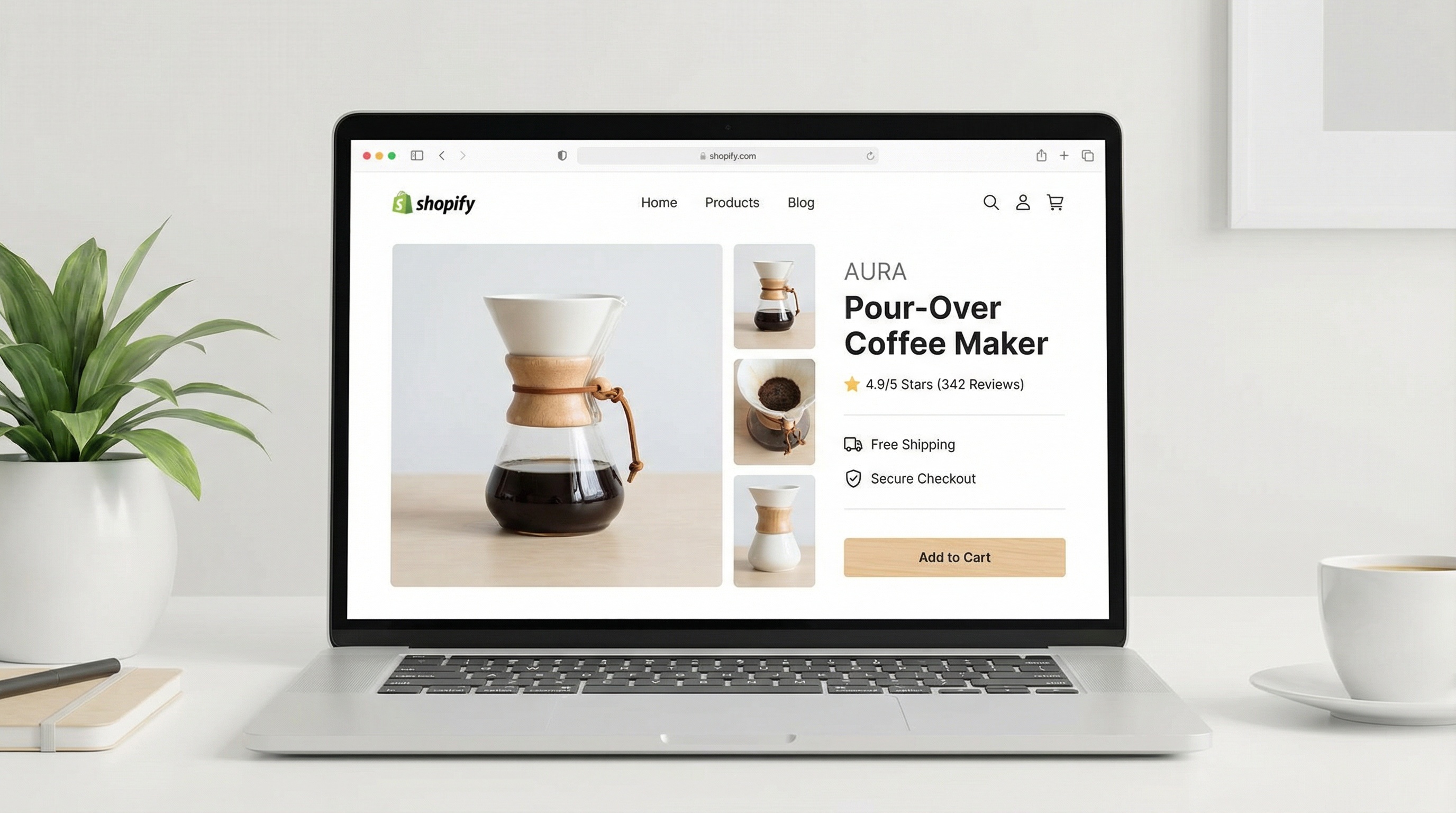
Photos carry trust. Dark images, mismatched styles, or supplier pictures can make a store feel temporary. You do not need studio perfection, but you do need clarity.
Problem it solves: Buyers hesitate because the product looks uncertain.
Benefits:
- Shows details that buyers want to check.
- Helps customers imagine size and use.
- Makes your store look more consistent.
- Increases confidence before checkout.
4. Add Basic Trust Pages
Shopify for beginners tip: If your store misses the pages that people look for when they are unsure, you need to change it! A simple About page, Contact page, shipping info, and returns policy make a big difference.
Problem it solves: Fear of scams or poor service.
Benefits:
- Gives visitors a reason to trust the store.
- Reduces “Is this real?” hesitation.
- Lowers support questions later.
- Helps buyers feel safe placing a first order.
5. Get Reviews Early
A store with zero reviews feels risky. Yes, even if the product is good. Start collecting honest reviews as soon as you can. Keep them real and specific.
Problem it solves: Lack of proof that the product works for real people.
Benefits:
- Builds trust faster than sales copy.
- Helps new visitors decide quicker.
- Improves product page performance.
- Creates feedback you can use to improve.
6. Bring the Right Traffic
High traffic numbers look nice when you know how to get sales on Shopify. But pay attention: random visitors do not buy. You want people who already care about the type of product you sell. Start with one channel and learn it.
Problem it solves: Many visits but few sales.
Benefits:
- Improves the chance that visitors fit your offer.
- Makes marketing spending more efficient.
- Reduces bounce because the message matches intent.
- Helps you learn what content attracts buyers.
7. Use Bundles to Raise Order Value
Once you get some sales, growth often comes from increasing how much each customer buys. Bundles work because they reduce choice and feel like a complete solution.
Problem it solves: Low average order size.
Benefits:
- Increases revenue without needing more visitors.
- Makes buying simpler for customers.
- Helps move related products together.
- Gives a reason to spend a little more.
8. Offer a Small Free Gift Threshold
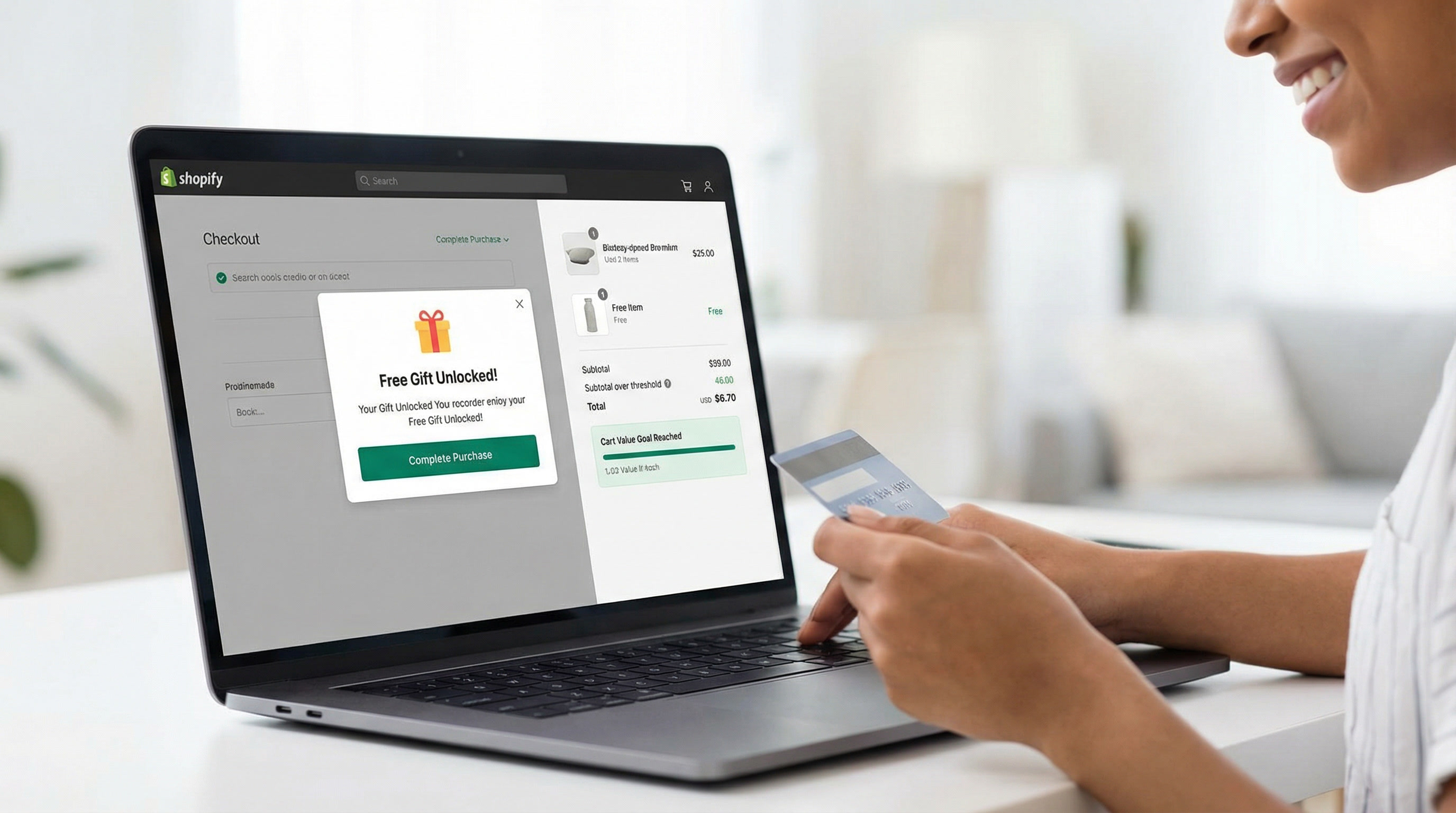
A free gift tied to a minimum cart amount can push people to finish the purchase. Keep it simple and relevant.
Problem it solves: People abandon carts because they feel the purchase is useless.
Benefits:
- Encourages customers to add one more item.
- Makes the deal feel better without heavy discounts.
- Improves checkout completion.
- Can introduce a second product for future sales.
9. Simplify Checkout
Checkout is where many beginner stores lose buyers. Long forms, unclear shipping costs, and surprise fees create doubt at the worst time. Test your own checkout from start to finish.
Problem it solves: Drop off at the payment stage.
Benefits:
- Reduces friction during purchase.
- Lowers the chance of last-minute hesitation.
- Improves conversion without new marketing.
- Makes it mobile-friendly.
10. Build an Email List From Day One
Most visitors will not buy on the first visit. Email gives you a second chance to bring them back. Keep emails helpful and short, not pushy.
Problem it solves: Lost potential buyers who leave and never return.
Benefits:
- Brings warm traffic back to your store.
- Helps you build familiarity over time.
- Supports repeat purchases and new launches.
- Gives you a channel you control.
Why Shopify Bundles Increase Sales Without More Traffic
Most beginners try to grow by buying more traffic. Ads, influencers, email lists. Traffic matters, but knowing how to drive sales on Shopify is better. Bundles work differently. They increase what each customer spends once they are already in your store.
When someone decides to buy, they are in decision mode. If you present a bundle that solves a full problem, they often choose it over a single item. It feels complete. It feels like a better deal. You earn more per order without pushing harder on ads.
Bundles also reduce decision fatigue. Instead of asking customers to pick three related items one by one, you group them in a way that makes sense. The buying process feels smoother. Fewer clicks. Fewer doubts. If you are serious about improving results, bundles are one of the first must-have Shopify app strategies to test.
The Best Revenue Drivers
These are the apps that directly influence revenue. They do not just make your store look better. They change how much money you earn from each visitor.
Koala Bundles: Lift Your Average Order Value
Our top pick for upsells is Bundles powered by Koala. It focuses on one core metric. Average Order Value. Instead of hoping customers add more items, you structure the offer in advance. For example, if you sell skincare, you can group cleanser, toner, and moisturizer into a routine set with a small discount. If you sell supplements, create a monthly performance pack. Customers understand the value right away.
The impact can be strong. Even a 15 percent lift in average order value changes the entire profit structure of your store. Ad costs stay the same, but revenue per order rises. That difference often turns a break-even campaign into a profitable one.
Koala Bundles makes this simple to set up. You choose the products, set pricing logic, and display the bundle clearly on product pages.
- Best For: Increasing average order value fast
- Key Feature: Easy product grouping with flexible pricing rules
What matters most is clarity. Do not overload customers with five bundle types. Start with one or two strong combinations and track the numbers for a few weeks. Refine from there.
Koala Free Gift: Increase Conversion Rate with Smart Incentives
The second revenue driver focuses on conversion rate. Sometimes customers reach checkout and hesitate. They think about shipping costs. They compare options. That is where gifting works.
Our recommended tool for gifting is Free Gifts through Koala. The idea is simple. Offer a free product when the cart reaches a certain value. This small reward often pushes customers to complete the purchase.
There is psychology behind it. People value bonuses even when the cost to you is low. A free accessory, sample, or mini product creates a feeling of winning. It also encourages customers to add one more item to unlock the reward. Free gifts reduce cart abandonment. Instead of leaving and thinking about it, they move forward to secure the bonus.
- Best For: Boosting conversion rate and reducing cart abandonment
- Key Feature: Automatic gift rules based on cart value
Used together, bundles and gifting create a strong revenue layer. Bundles raise the order value. Free gifts push more visitors to complete checkout. You improve both key metrics at the same time.
Shopify Sales Strategy
Sales usually come from small, clear decisions made in the right order:
- How you present your product,
- How simple your checkout feels
- How much trust your page builds in the first few seconds.
These details matter more than people think. Shopify gives you the base, yes. But the right tools make the difference. Beginners often try to do everything at once. And they end up with no Shopify traffic at all. A few well-chosen apps can support sales from day one, while the wrong stack only adds noise.



From the blog
Must-Have Shopify Apps to Scale Your Store in 2026

.jpg)
Boost Sales with Shopify Bundles: The Ultimate Strategy Guide
.jpg)
What is AOV in Shopify? How to Calculate & Increase Average Order Value
.jpg)
.jpg)